Friday, February 2, 2024
Friday 5ive- February 2, 2024
Friday, January 27, 2023
The Love You Save by Goldie Taylor
Monday, January 23, 2023
Two Powerful Reads to Start 2023
Reprinted from auburnpub.com
Welcome to 2023 and a new year of reading. This month’s Book Report has two books- one fiction, one nonfiction- that, although published in 2022, will start your year off right.
Celeste Ng continues her streak of writing outstanding novels (Everything I Never Told You, Little Fires Everywhere) with her latest and most powerful novel yet, Our Missing Hearts.
Bird is a twelve year-old boy who lives with his father on campus in Cambridge, Massachusetts. His father used to work as a linguist professor, but now he shelves books in the campus library.
Bird’s mother Margaret is a Chinese-American poet, whose most famous poem, “Our Missing Hearts”, unintentionally became a rallying cry for people protesting the US government policy of removing children from families deemed “unpatriotic.”
In order to keep her son safe, Margaret left the family three years ago. Bird’s father disavowed his wife and he has warned Bird to keep his head down, avoid the police and military, and obey all authority. Many people blame the Chinese for the economic downturn that destroyed the global and American economy, and Asians have become targets for hatred and violence.
When Bird receives a letter that consists of only a drawing, he believes it is from his mother and sets out to find her. In his journey he discovers a network of librarians who work underground to try and reunite children taken from their families by the government.
Our Missing Hearts is about a mother’s powerful love for her son, and a cautionary tale about how dangerous mob mentality can be. People quickly become willing to blame anyone who looks different for their own troubles. The books also touches upon the dangers of banning books, and the slippery slope where that can quickly lead.
I give Our Missing Hearts my highest recommendation, it has such relevance for what is happening today. It is insightful and moving.
I hadn’t heard of Jennette McCurdy, but her memoir I’m Glad My Mom Died has caused quite a stir, landing at the top of the bestseller list for months. McCurdy starred in the popular TV series “iCarly” as young teen, and her book is just astonishing.
Her mother Deb wanted Jennette to be an actress, and Jennette wanted nothing more than to please her mother. The only girl (she has three older brothers) in her family, all her mother’s dashed dreams of stardom are poured into Jennette. She is a stage mother run amok.
At the age of six, Deb began taking Jennette on auditions for commercials. She bullied a successful children’s agent into taking Jennette on as a client. Jennette began working fairly steadily, and because Jennette could cry real tears easily, she became the go-to child actress when anyone needed a young child to cry on camera.
Deb’s entire identity was wrapped up in her daughter’s success as an actress. The family had difficult financial times, and soon Jennette became the breadwinner for the entire family. Her earnings kept the creditors at bay. Deb also had health issues, and her battle with cancer left the children, especially Jennette, scarred and scared that her mother could die, which Deb manipulated to her advantage.
Jennette worked her way up, doing small parts on TV shows, like “CSI”, and in low budget feature films. Eventually as a teen she auditioned for and won a co-starring role in “iCarly”, which became a monster hit on the Nickelodeon children’s network. Jennette became a popular teen star.
All this success makes Deb keep a tighter reign on Jennette, but as Jennette grew older, she resented her mother and her mother’s emotional and physical abuse. Jennette wasn’t allowed to date, and she was naive for someone her age. She finally found a taste of freedom when she went to Nashville to record an album and her mother had to stay behind for medical treatments.
Jennette’s life is filled with her mother’s mental illness and possessiveness, and eventually lead Jennette to addiction, bad relationships, and a dangerous eating disorder. Her description of her spiraling downwards into alcoholism is harrowing.
If you read Matthew Perry’s memoir Friends, Lovers, and the Big Terrible Thing about his drug and alcohol addition, this is your next read. I couldn’t put it down.
Our Missing Hearts by Celeste Ng- A+
Published by Penguin Press
Hardcover, $29, 335 pages
I’m Glad My Mom Died by Jennette McCurdy- A+
Published by Simon & Schuster
Hardcover, $27.99, 304 pages
Friday, June 10, 2022
Friday 5ive- June 10, 2022
Tuesday, April 12, 2022
Healing- When A Nurse Becomes A Patient by Theresa Brown, RN
Wednesday, February 2, 2022
Penis Politics by Karen Hinton
Monday, September 27, 2021
The Prison Guard's Daughter by Deanne Quinn Miller
Deanne's young mother had two young daughters and another on the way when her husband was held hostage with dozens of other corrections officers as over 1200 inmates at the Attica maximum security prison overtook the guards on September 9th and held 42 guards hostage in the prison yard. On September 9th, Billy Quinn's badly beaten body was brought to the gate, and he was taken to a hospital where where he perished from his injuries on September 11, 1971.
After four days of negotiating with the inmates over their list of demands, many of which were for just and humane treatment, negotiations ended and the inmates were ordered to surrender. Inmates lined up hostages on a catwalks and held knives to the throats of guards. On September 13th, helicopters dropped tear gas into the yard and state troopers and other law enforcement officers charged the yard with guns shooting. The 39 people killed, including 10 guards, were killed by bullets from those guns, although initial reports erroneously stated inmates killed the guards.
After years traumatized by her father's death which caused her physical and emotional ailments, Miller joined the FVOA- Forgotten Victims of Attica. Miller (reluctantly at first) became more involved in the organization, who aimed to get New York State to provide monetary compensation, similar to the $12 million provided to the inmates who were severely beaten and tortured by law enforcement following the disastrous and violent overtaking of the prison.
Widows of the officers killed were tricked into accepting a small worker’s compensation check, without knowing that cashing it meant they could not sue New York State its role in their husbands’ deaths. Only one widow refused to cash the check, and she successfully sued New York State and received a $1 million settlement.
The FVOA spent more than thirty years working with lawyers, reporters, accountants and state legislators trying to get an equitable settlement for the widows and officers before the now elderly widows and guards died.
Miller became a spokesperson for FVOA, and in that position she became known to legislators and reporters, including Gary Craig from the Rochester Democrat and Chronicle, who cowrote the book with Miller. Through this position, Miller became good friends with Richard X. Clark, the leader of the Muslim inmates, and Frank “Big Black” Smith, a former Attica inmate who worked to get the inmates their settlement. She wanted justice not just for the officers but also for the inmates. She wanted the truth to come out.
In addition to the monetary settlement, Miller wanted to know the truth about how her father died. Two inmates were convicted in his death, but they didn’t spend much time in prison for their roles when their sentences were commuted by the governor. She had to face one of them at a public hearing, in front of a large audience, an awful situation.
The FVOA had a Five Point Plan for Justice, asking for the state to provide restitution, offer counseling to those who wanted it, open any Attica records closed to the public, ensure an annual FVOA memorial ceremony on prison grounds, and apologize.
Fifty years after the riot, they are still waiting for an apology. The victims received a $12 million settlement. The state wanted the victims to pay for counseling out of their settlement.
The Prison Guard’s Daughter is an important book, not only for its historical context (many people under the age of 50 don’t know about Attica), but for the emotional journey that Deanne Quinn Miller shares with readers. Her strength and perseverance is inspiring.
The Prison Guard’s Daughter by Deanne Quinn Miller- A
Published by Diversion Books
Trade paperback, $17.99, 268 pages
Wednesday, August 18, 2021
There Will Be Lobster by Sara Arnell
Review Stops
Tuesday, July 27th: Run Wright
Thursday, July 29th: Instagram: @readinggirlreviews
Friday, July 30th: Instagram: @pnwbookworm
Monday, August 2nd: Instagram: @gracereads82
Tuesday, August 3rd: Instagram: @neverthless_she_reads
Wednesday, August 4th: Instagram: @bluntscissorsbookreviews
Thursday, August 5th: Instagram: @babygotbooks4life
Friday, August 6th: Instagram: @booksaremagictoo
Monday, August 9th: Welcome to Nurse Bookie
Tuesday, August 10th: Instagram: @books_and_broadway_
Wednesday, August 11th: Bibliotica
Thursday, August 12th: Diary of a Stay at Home Mom
Friday, August 13th: A Bookish Way of Life
Monday, August 16th: Jathan & Heather
Tuesday, August 17th: The Bookish Dilettante
Wednesday, August 18th: bookchickdi
Thursday, August 19th: Instagram: @mrsboomreads
Tuesday, June 15, 2021
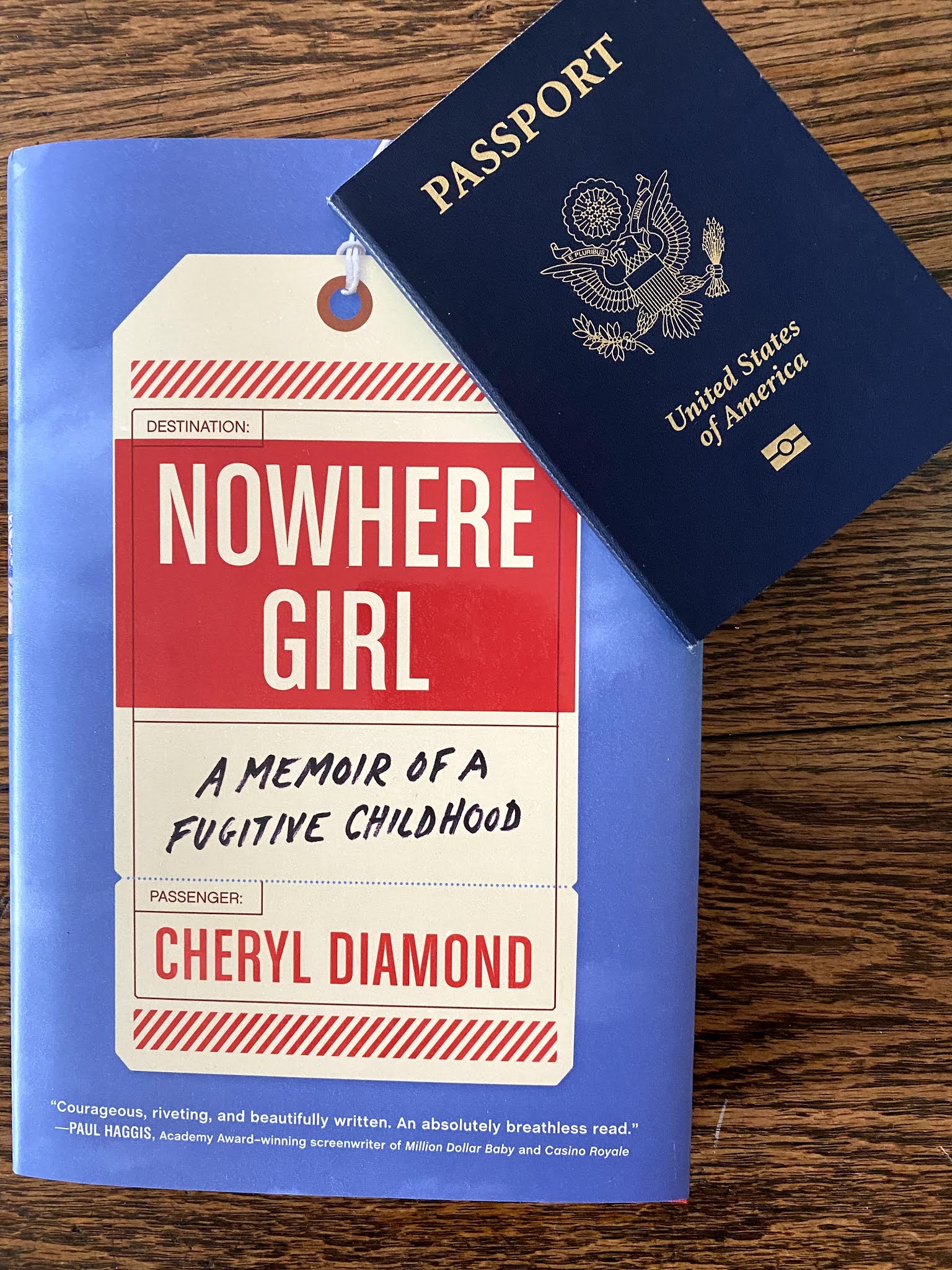
Nowhere Girl by Cheryl Diamond
Monday, April 26, 2021
Le Deal by J. Byrne Murphy
Monday, April 19th: Diary of a Stay at Home Mom
Tuesday, April 20th: Instagram: @readingmama_reviews
Thursday, April 22nd: Musings of a Literary Wanderer
Monday, April 26th: bookchickdi
Tuesday, April 27th: Run Wright
Wednesday, April 28th: Instagram: @gracereads82
Wednesday, May 5th: Instagram: @megsbookclub
Thursday, May 6th: Jathan & Heather
Tuesday, May 11th: Man of La Book
Wednesday, May 12th: Instagram: @jenguerdy
Thursday, May 13th: Bibliotica
Friday, May 14th: What Is That Book About
Monday, February 1, 2021
Odd Woman Out by Melanie Chartoff
Monday, January 13, 2020
When Life Gives You Pears by Jeannie Gaffigan
Published by Grand Central ISBN 9781538751046
Hardcover, $28, 303 pages
If you're familiar with comedian Jim Gaffigan, you know from his standup routines that he has five children and an amazing wife Jeannie. In addition to parenting their five children Jim and Jeannie write together- his standup comedy specials and books, and they created and produced his sitcom, The Jim Gaffigan Show, based on their family life, that ran for two seasons on TV Land. (You can watch it here- it's fantastic.)
In 2017, while Jeannie had coralled the children to their pediatrician for a visit, the doctor noticed that Jeannie has troubling hearing out of one ear and recommended that she see an ENT doctor. What the doctor found was that Jeannie had a brain tumor the size of a pear.
Jeannie describes what happened next in her memoir When Life Gives You Pears- The Healing Power of Family, Faith, and Funny People. She takes the reader along on her medical journey, through the fears and pain, and yes, because she sees everything though the lens of comedy, the laughter too.
Jeannie Gaffigan is a woman of strong Catholic faith, and she relied on that to help get her through this frightening event. Being the mother of five young children and living in New York City, she is also an extremely organized woman. (Just trying to get the children to their various schools located in all the different corners of Manhattan is a Herculean task.)
And even though the Gaffigans were able to find and afford the best doctors, things can go wrong. After a successful surgery to remove the tumor, Jeannie aspirated and got life-threatening pneumonia in both lungs.
Jeannie's road to recovery would be long and difficult. She and Jim had to rely on neighbors, family, and friends to help care for the children, and for Jeannie when she came home. She takes us through the various nurses, doctors and therapists who helped her get better to get home to her family.
A Shift Schedule was created so that Jeannie wouldn't be alone in the hospital. Her mom flew in to stay with the children. Her many siblings left their own families and jobs to come help out. As the oldest child of nine, Jeannie helped raise some of her siblings and they came to help her in her time of need becasue that's what families do.
I highly recommend When Life Gives You Pears. Jeannie Gaffigan is a terrific writer; her organizational skills, her humor, and her humanity shine through the pages. Most of us will go through some kind of medical episode either ourselves or with someone we love, and we'll be able to relate to Jeannie's journey. I put this one on my annual list of the Most Compelling Books I Read in 2019 (and I read nearly 100), and you should read it in 2020.
Thursday, November 7, 2019
Body Leaping Backward by Maureen Stanton
Published by Houghton Mifflin Harcourt ISBN 9781328900234
Hardcover, $26, 215 pages
Maureen Stanton's coming-of-age memoir in her working-class prison town in the 1970s, Body Leaping Backward- A Memoir of a Delinquent Girlhood, appealed to me for many reasons. I too grew up in a working-class prison town in the 1970s, and I came from a Catholic family with many children.
Stanton took me right back to those days- kids playing Flashlight Tag or dodgeball, waiting to hear their mother's voice calling them in for dinner, riding bikes all over town, piling everyone in the car to go to the drive-in movies.
Coming from a large family, (there were seven Stanton children) I could relate to her mom meticulously dividing up a bag of M&Ms so that each child got exactly the same amount. I vividly recall going to confession at church, and, like Maureen, worrying about what sins I would have to confess to (you don't want to keep repeating yourself week after week, but what kind of sins can a young child commit?).
I found Stanton's memories of Walpole prison interesting. The prison occupied a large presence in the town, both physical and emotional, although I don't recall my mother threatening us with ending up in the local prison if we misbehaved, like her mother frequently did.
The Stantons would visit the Hobby Shop, a gift shop located just inside the prison walls, where anyone could buy furniture, jewelry, dollhouses and crafts made by inmates. Most of the children's rooms were furnished from here. The man who ran the shop was a famous Boston mobster, and convicted Boston Strangler Albert DeSalvo made jewelry that was sold in the hobby shop. (The town I grew up in did not have a retail shop so I found this fascinating and very strange.)
Life changed drastically for the Stantons when their parents divorced and their father moved out when Maureen was twelve years old. Money became scarce, and her mother resorted to shoplifting to feed the family. Eventually, her mother went back to school to become a nurse. She went to school all day, came home to do homework, and then fed her family dinner. It was a difficult life.
By the time she was in tenth grade, Maureen was using angel dust (PCP). Angel dust causes you to lose depth perception and balance, causes difficulties in concentration, and apathy. It's a serious drug, and Maureen and her friends were using it frequently. She began skipping school, stealing, became involved in petty crime. (She thought this was typical teenage behavior, but I did not relate to that.)
Stanton weaves in historical context to give the reader a good sense of what life was like at that time. Bomb scares were rampant in the 1970s, and "between 1971 and the end of 1972, the FBI reported 2500 bombings on US soil, an average of five bombings per day". Overall, crime rose in the 1970s, and the town of Walpole was no exception.
In her junior year of high school, Maureen got a job at a gas station, where she earned work-study credits, and learned a lot about life based on the customers that she waited on. She also met a man who helped her reconnect with her love of literature and writing.
She took a writing class in college, and when her mother found Maureen's high school diaries while moving, Maureen used that as the basis for this powerful memoir. Stanton's writing is crisp and poignant, like this sentence she writes describing her parents telling the children about their separation- "A tear slipped down my father's cheek, and then like a chorus we all cried, our last act as an intact family."
If you came of age in the 1970s, Body Leaping Backward will take you back to that time. Fans of Mary Karr's The Liar's Club should put this one on their list.
Thanks to TLC Tours for putting me on Maureen Stanton's tour. The rest of the stops are here:
Instagram Features
Review Stops